

Our independent guides cover key areas of health, safety and environmental legislation and duties.

Filter by
Workplace guides

New and expectant mothers at work, what should I have in place?
Pregnancy is a part of everyday life and many women work while pregnant, and many return to work while they are still breastfeeding. New and expectant mothers’ health and safety must be adequately risk assessed. A risk assessment on new and expectant mothers, to identify any hazards in the workplace that may affect their health and safety must be completed.
Read more
Why is noise an important issue in the workplace?
Hearing loss, caused by exposure to noise in the workplace, continues to be a major occupational disease. According to the HSE, an estimated 15,000 people working during the last year suffered from noise induced hearing loss that was caused or made worse by work. This is based on data from the Labour Force Survey (Estimated using three years of the Labour Force Survey from 2016/17 to 2018/19), equating to a rate of 62 cases per 100,000 people employed in the last 12 months.
Read more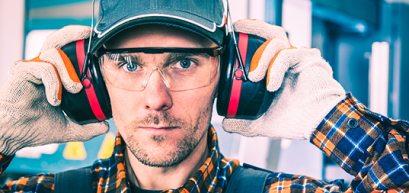
How do I know if I need a noise risk assessment?
You are required to have a risk assessment by law if the daily ‘personal noise exposure’ of any of your employees, or people carrying out work on your behalf, is 80dB (A-weighted) or above.
Read more
What do I need to know about Ozone in the workplace?
Ozone (O3) is a triatomic molecule which consists of three oxygen atoms (oxygen consists of two atoms), and is a colourless gas. Stratospheric ozone (in the upper atmosphere) is known as the ozone layer and protects our health by shielding us from the sun’s ultraviolet rays. However, at ground level, ozone (tropospheric ozone) is a pollutant with highly toxic effects. It is a hazard to human health, the environment and a wide range of natural and artificial materials.
Read more
What is Pandemic Flu?
Pandemic (from the Greek for pan, "all" and demos 'crowd') is the spread of a new infectious disease across large regions of or the whole World, which affects many people. They are distinct from epidemics, for example such as seasonal flu, insofar as these tend to affect people within specific populations or regions at the same time and their spread is not as wide as a pandemic.
Read more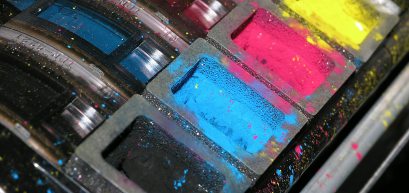
Indoor air quality: How could photocopier emissions affect me?
Photocopiers and laser printers emit hydrocarbons, ozone, volatile organic compounds (VOCs) and dust from paper and toner.
Read more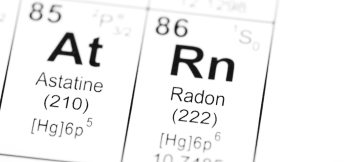
What do I need to know about Radon in the workplace?
Radon is a chemical element (atomic number 86). It naturally occurs as a colourless, odourless and tasteless gas and is formed as one of the intermediate products of the radioactive decay of uranium. Radon is one of the noble gases.
Read more
What does a health and safety at work risk assessment include?
A risk assessment is an important step in protecting your workers and your business, as well as complying with the law. It helps you focus on the risks which really matter in your workplace – the ones with the potential to cause real harm. In many instances, straightforward measures can readily control risks, for example ensuring that spillages are cleaned up promptly, so people do not slip, or that walkways are kept clear to ensure that people do not trip. For most, that means simple, inexpensive and effective measures to ensure that your most valuable asset – your workforce – is protected.
Read more